
The Reason Your To-Do List Never Gets Shorter Isn’t Time
You don’t need more hours or a better app. You need to stop treating everything on it as the same size.

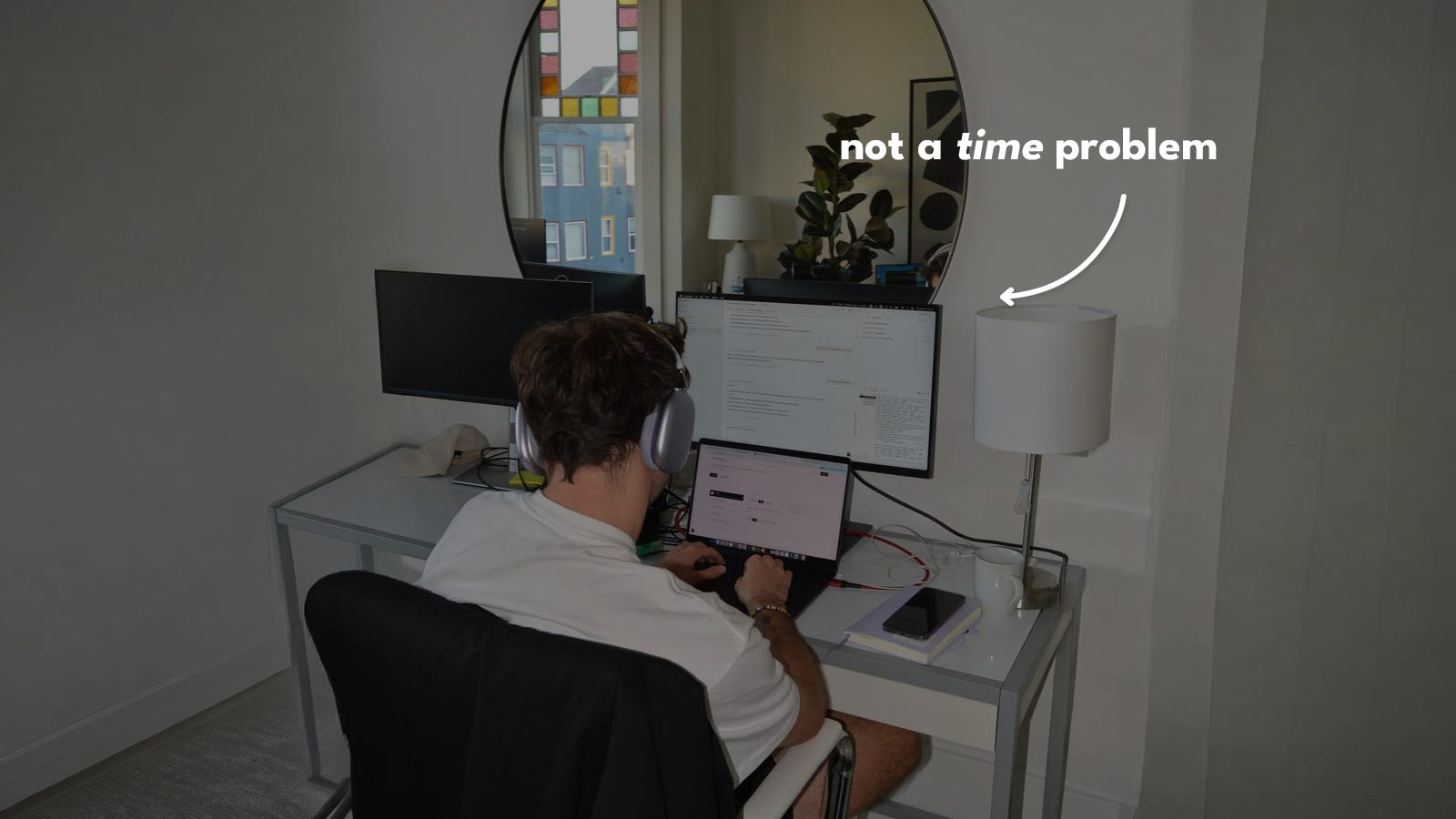
For years I measured a day by how much of a to-do list I cleared. And I got good at it. I’d knock out thirty small things before lunch, keep the inbox near zero, end most days with almost everything crossed off, and feel like I’d won. It looked like progress from the outside, and honestly it felt like progress from the inside too.
Then I’d look up after a couple of months and notice the one thing that actually mattered was still sitting there, untouched. Not because I ran out of time. I had the time. I’d spent it, cheerfully, on twenty things that felt urgent and changed nothing, while the hard, slow, important one kept losing to whatever was easier to cross off. The list kept getting done. My real work kept not.
Because a to-do list isn’t a time problem. It’s a priority problem wearing a time problem’s clothes. It treats a two-minute reply and the one thing that would change your month as the same size, a checkbox each, so you clear the easy, urgent, satisfying ones and the thing that mattered rolls quietly to tomorrow. You’re not behind on time. You’re behind on the two or three things worth doing, buried under twenty that weren’t.
THE WHOLE THING
If you take nothing else from this, take these three lines.
A list measures how much you got through. Your work measures whether the right things got done. Those were never the same number, and it’s the second one that shows up in your life a year from now.
Most of what’s on your list can’t move you, no matter how well you do it. It’s maintenance: real, necessary, and completely incapable of changing your month.
The one or two things that would actually move you never feel more urgent than the rest. So they lose to the easy, satisfying, checkable stuff, quietly, every day, until you look up and the year is gone.
Everything below is just how to stop letting that happen.
MOST OF THE LIST WAS NEVER GOING TO MOVE ANYTHING
Take a normal day’s list and run one honest test on it: which of these, done or not, will actually matter in a month? Not which feel good to cross off. Which move something. Usually the honest answer is one item, maybe two. The list gives every line the same weight, a checkbox each, and that even spacing is the whole trick: it makes clearing a dozen Slack replies and finishing the proposal that could win the client look like the same size job.
Be honest about which items would actually matter in a month. It’s almost never more than one or two: the pitch, the portfolio piece, the reps on the skill you’re trying to get good at. Everything else is maintenance, and maintenance passes itself off as progress because it’s real work and it genuinely needs doing.
Maintenance is real work that moves you exactly nowhere. Clearing the inbox, replying in the group chat, tidying the doc, updating the tracker. All necessary, all incapable of changing where you are. You can do it flawlessly for a decade and end up in the same spot, just very well organized.
A shorter list and a better month are not the same thing. Clearing it feels like winning because the number drops and the number is right in front of you. But that number was never measuring the thing you actually care about. You can finish a spotless week having moved nothing.
PROTECT THE FEW, LET THE REST ROT A LITTLE
Once you know which one or two things actually move you, the job changes. It stops being “get through the list” and becomes “defend those two from everything else.” And everything else fights dirty, because the small stuff is urgent and easy and satisfying, and the thing that matters is slow and hard and quiet. Left to a fair fight, the small stuff wins every morning.
Decide the one or two the night before, and do them first, before anything else gets a vote. The proposal, the outreach that actually lands clients, an hour of real practice on the skill you’re building. Put it in the first block of the day while your head is still clear, before you open the inbox and it starts handing you other people’s priorities.
A surprising amount of low-value work, left alone, quietly turns out not to matter. The email that felt urgent gets handled by someone else, or resolves itself, or the moment passes and nobody remembers it. A lot of what you rush to clear was never going to be missed. You only find that out by not doing it and watching nothing happen.
Letting the small stuff rot a little is a skill, not a character flaw. It feels irresponsible, because a full inbox and an unread group chat sit there looking like obligations. But guarding two hours for the work that compounds, and letting the rest wait longer than feels comfortable, is the whole difference between a busy year and a year that actually moved you.
The list rewards you for finishing things. It has never once cared whether they were the right things.
WHAT A SHORTER LIST WON’T GIVE YOU
Here’s the part that catches people. You can get faster at the list forever, clear it earlier every day, build a cleaner system every quarter, and none of it will ever feel like being ahead. Because ahead was never the length of the list. The people who seem to be moving aren’t running the same race a little faster. They quietly stopped scoring themselves on how much they got through and started scoring themselves on whether the one or two things that matter actually got done.
So picture the version of you a year from now who did that. Most days still ended with a list half-finished, and it stopped bothering you, because the pitch went out, the skill got its hours, the thing you were building moved a little every week. You didn’t get more disciplined or find more time. You just picked the two that made the week count, guarded the hours for them, and let the rest be as long as it wanted. A year of that doesn’t look busy. It looks like someone who finally got somewhere.
Protect the two things on it that would actually change your year.
NVLT
What’s the one thing on your list that would actually move you this week?
And be honest: is it the thing you’ll do first tomorrow, or the thing that keeps quietly losing to the small stuff? Tell me in the comments.
About NVLT
Career advice is very good at making a simple thing feel impossible. NVLT is the simple version of getting ahead: how to get good at your work, get the raise, land the clients, price what you make, and build something that pays while you sleep, in plain language, none of the noise. If you’re done chasing the next hustle and just want to build something that compounds and get on with your life, you’re in the right place.